Technical parameters
Downloads
Characteristics
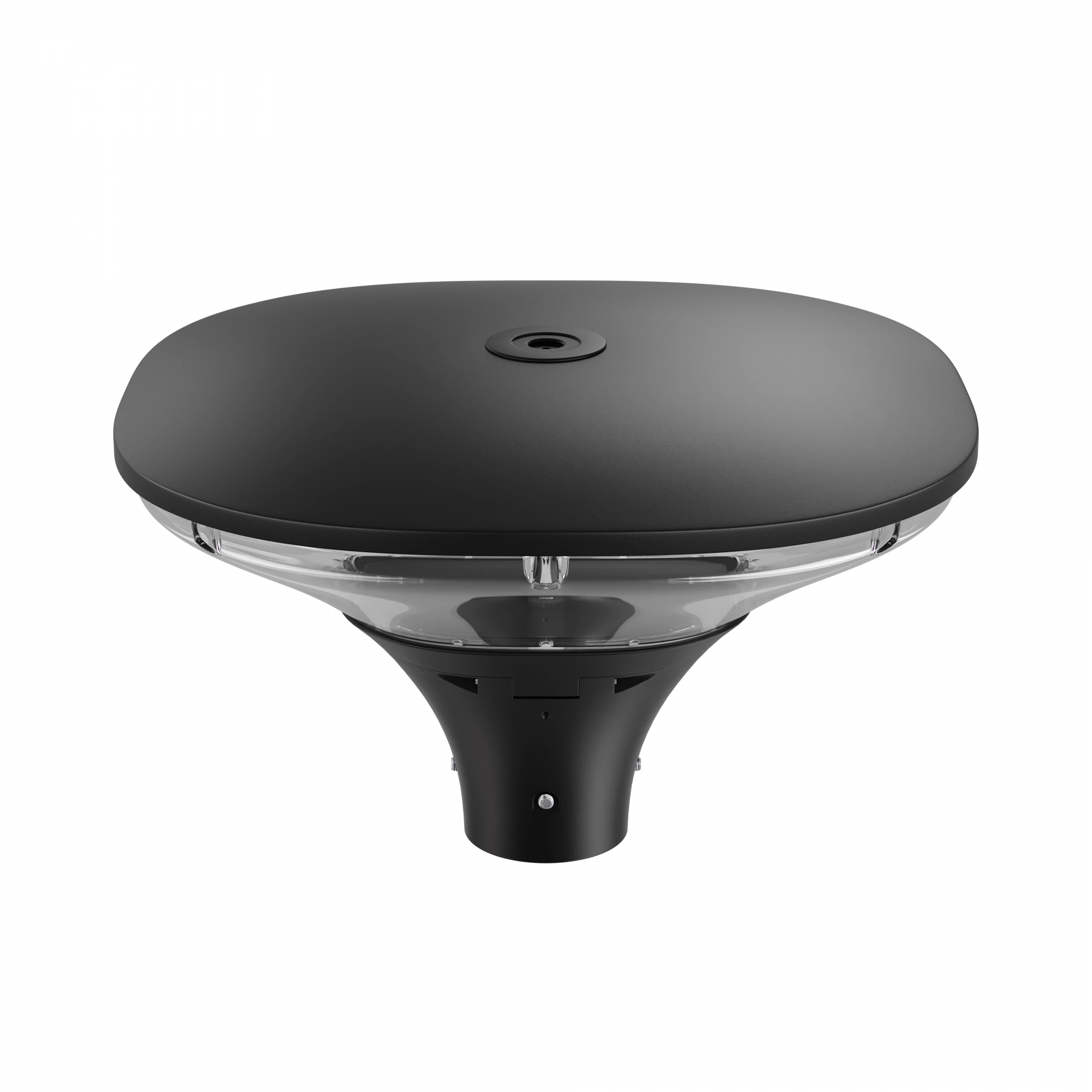
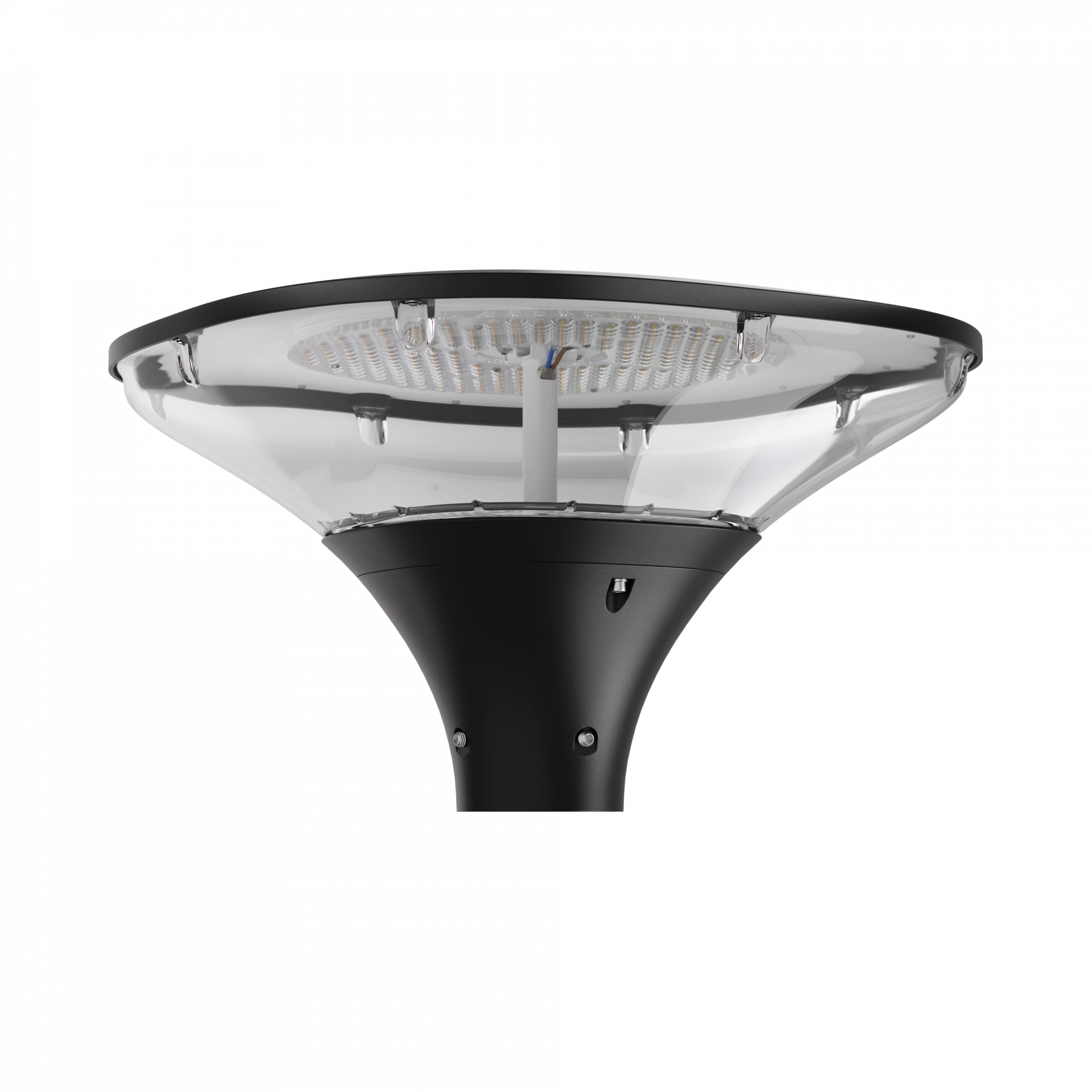
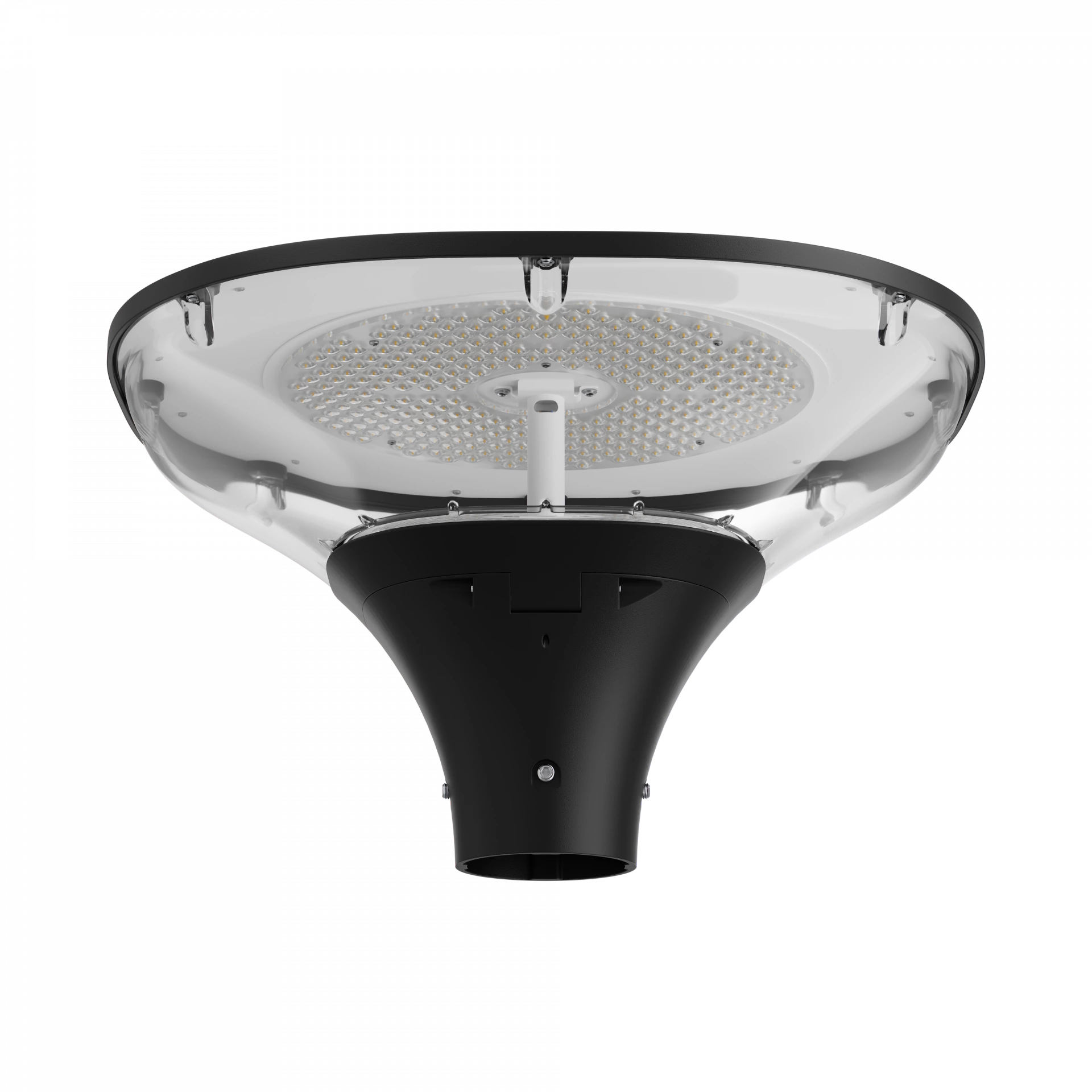
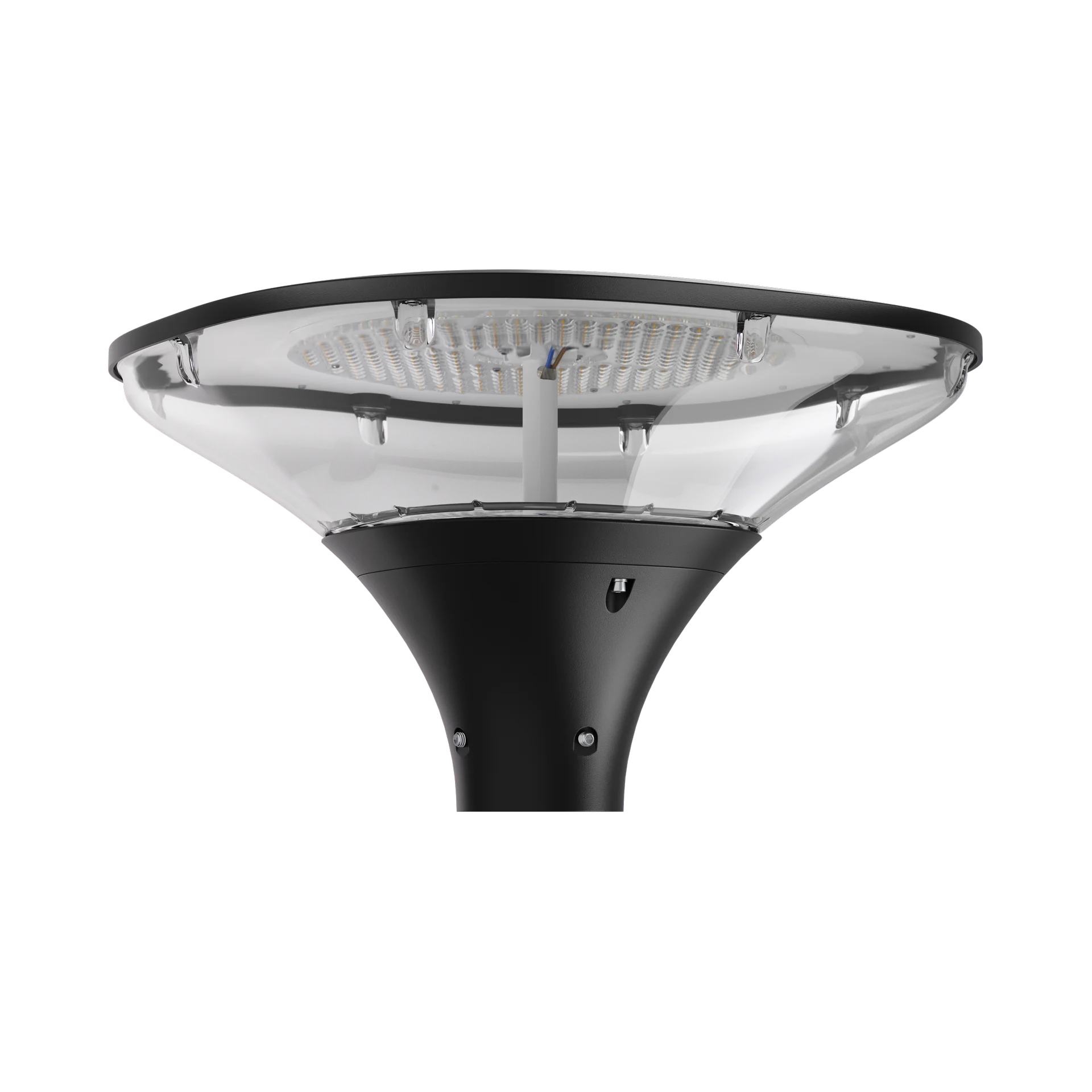
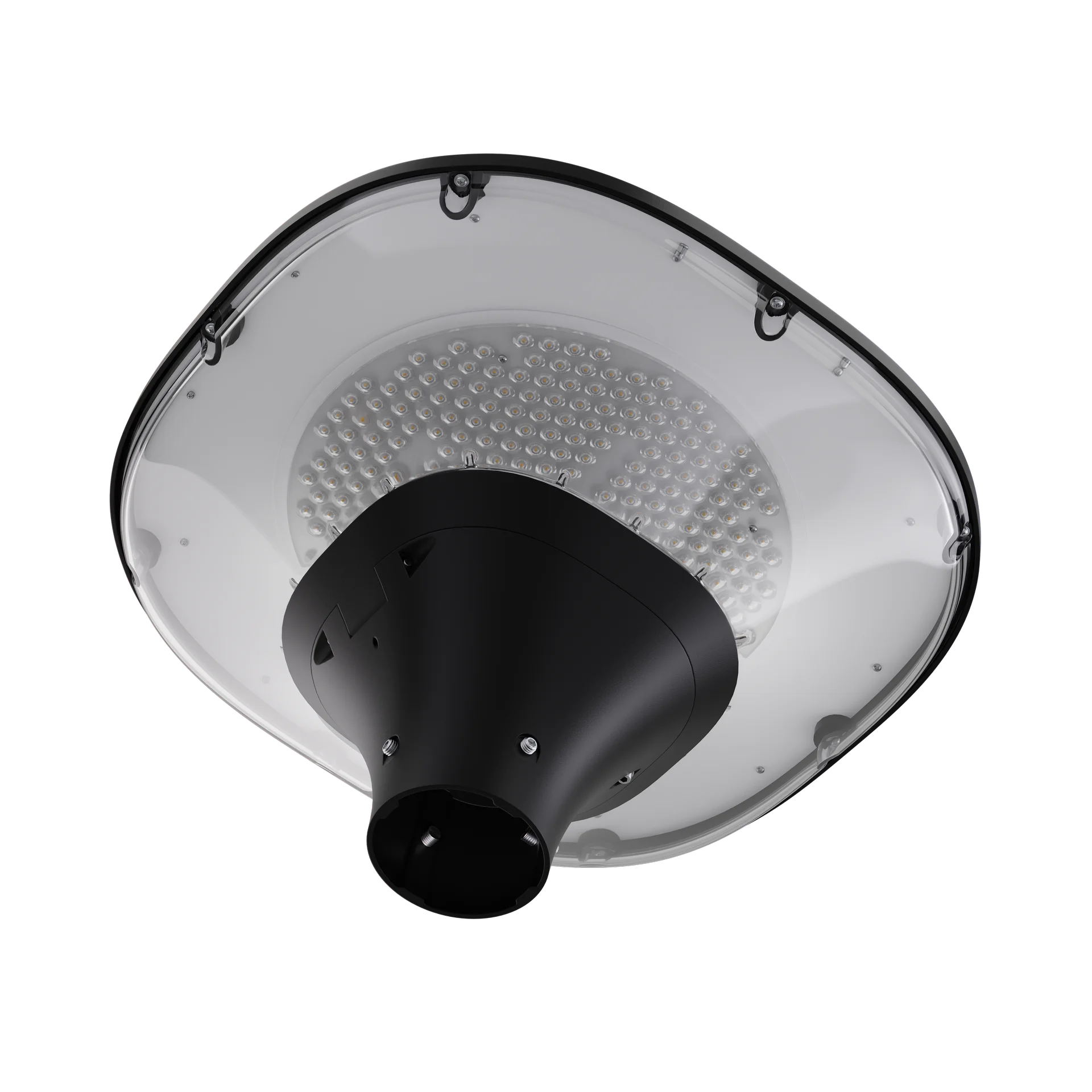
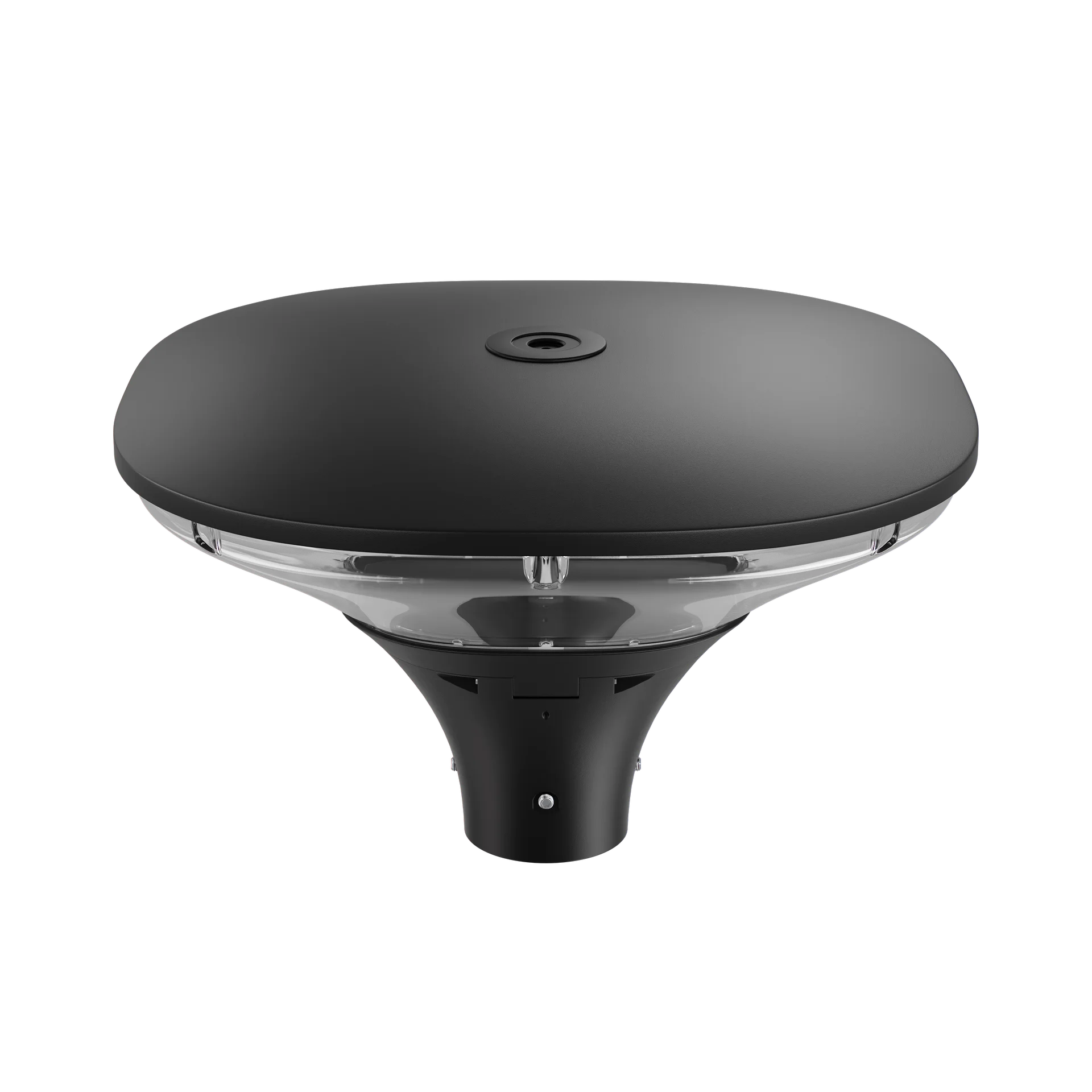
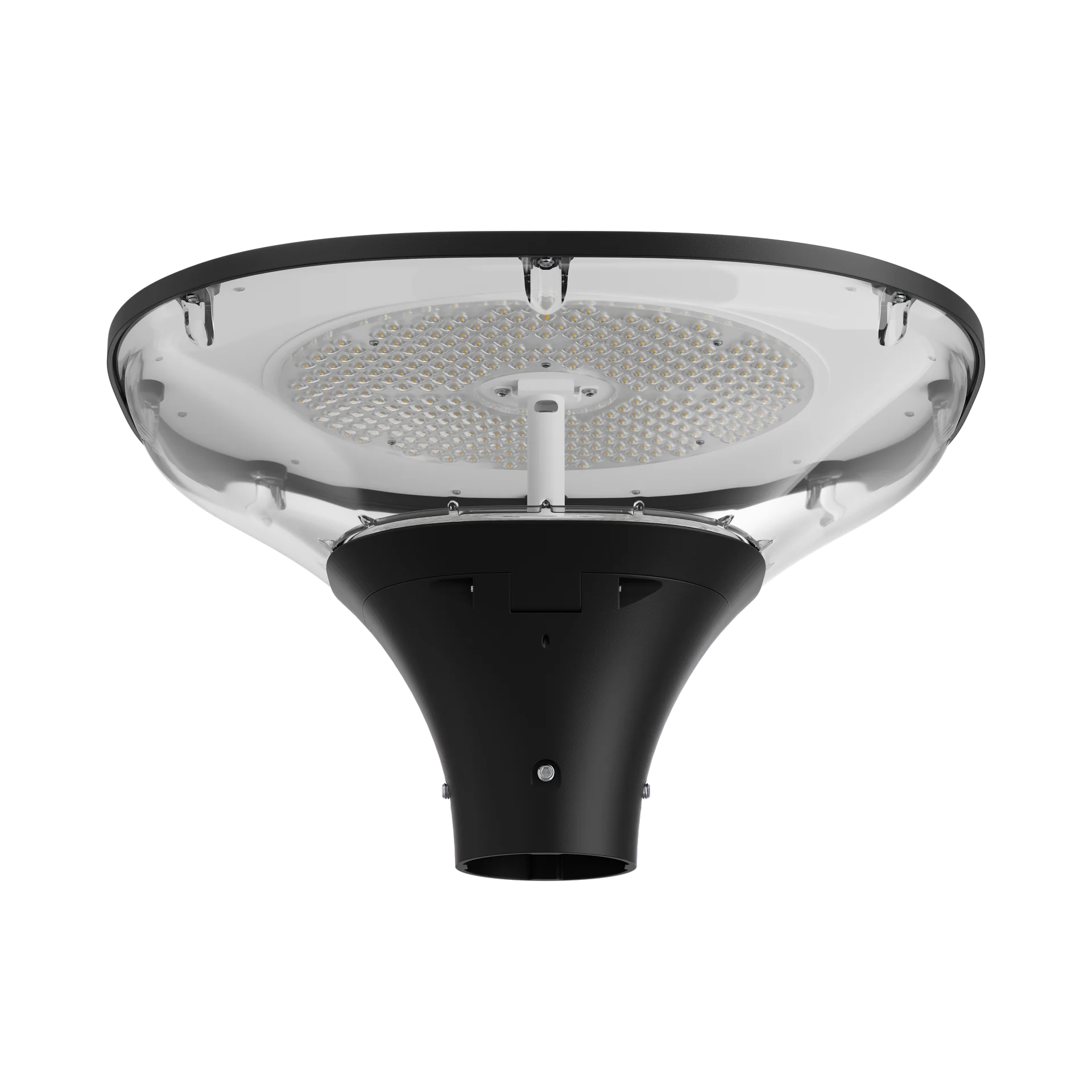
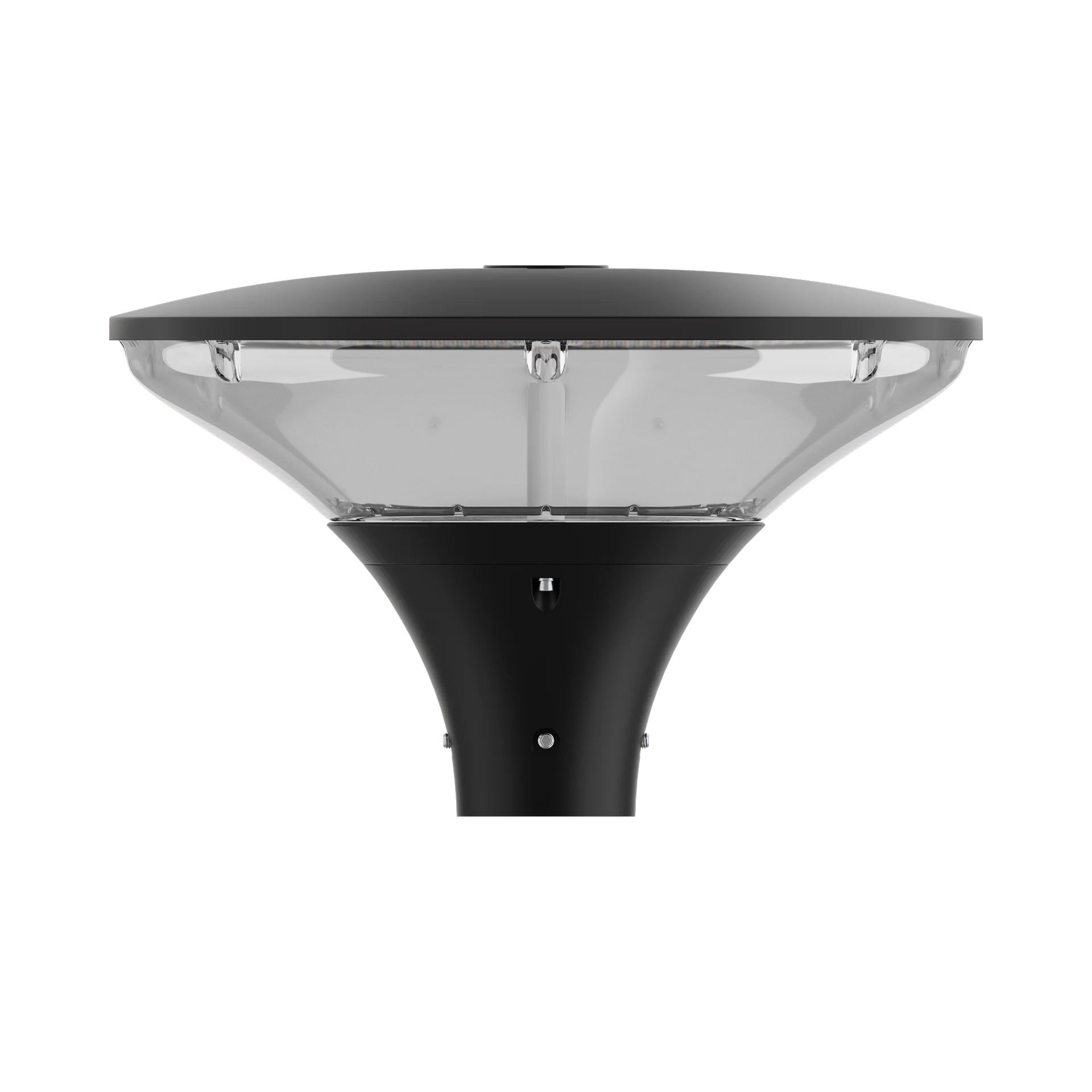
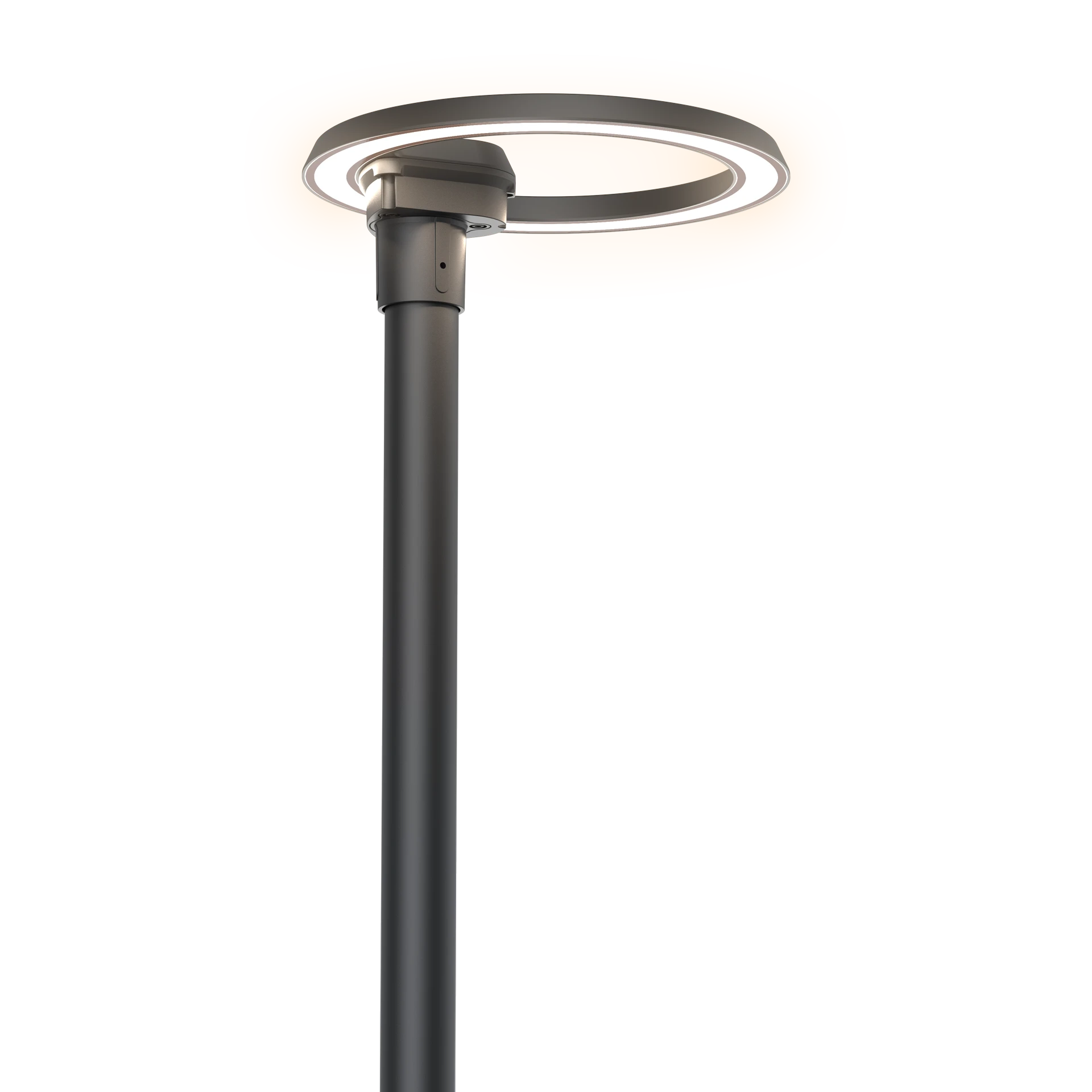
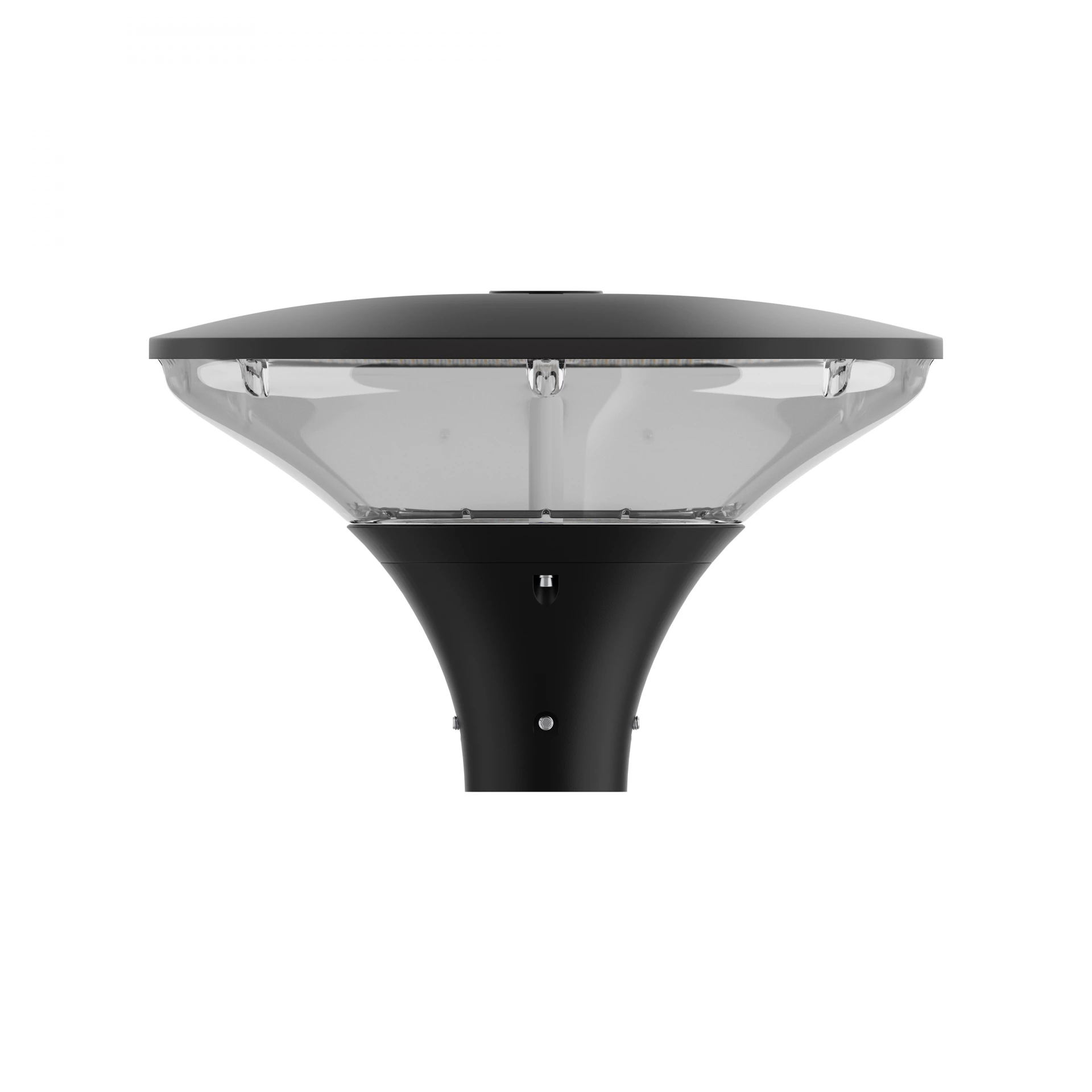
AURA is a modern LED luminaire engineered for recreational and urban environments: parks, promenades, public squares and landscaped areas. It delivers comfortable, uniform illumination supporting safe pedestrian activity after dark while enhancing the architectural and aesthetic value of the surroundings.
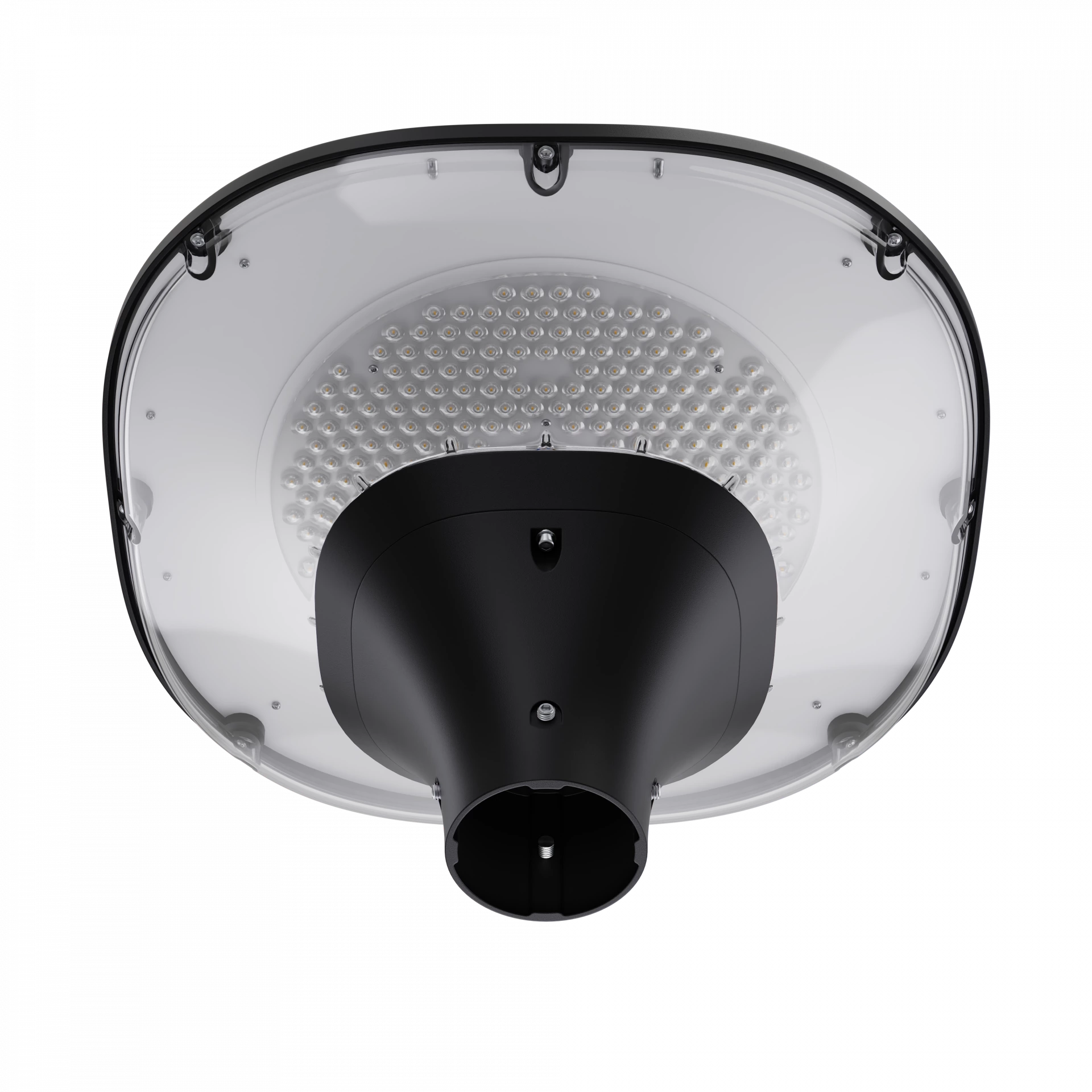
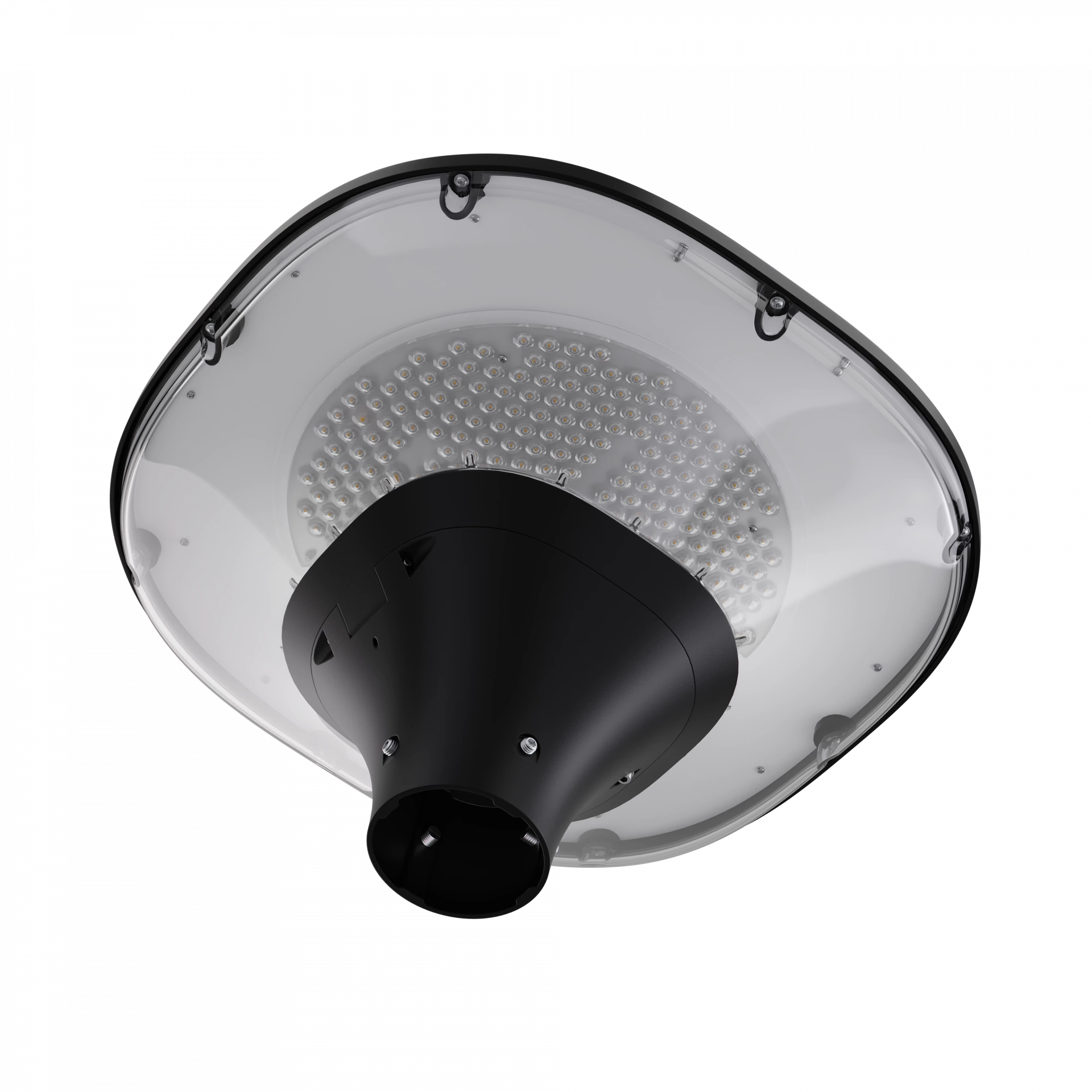
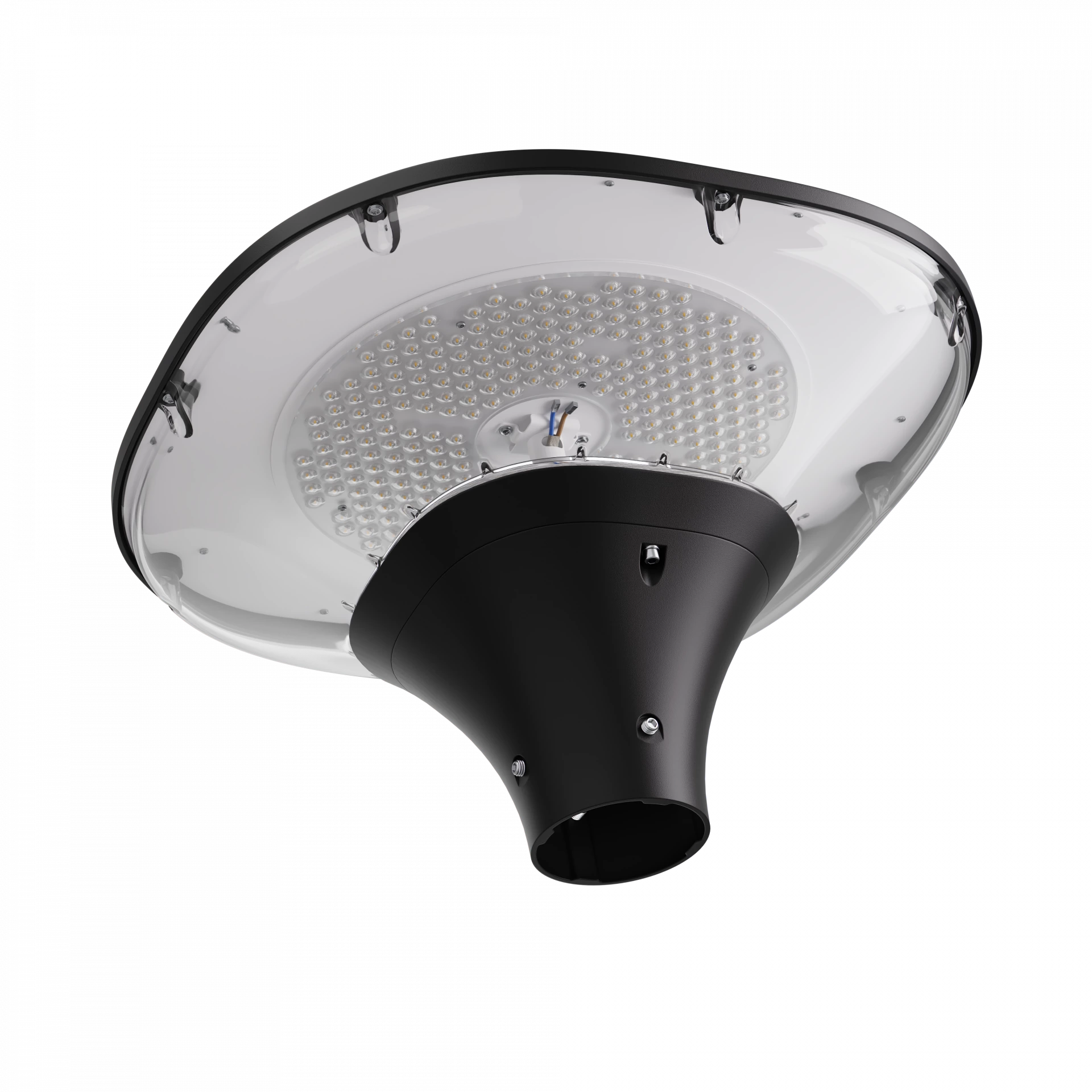
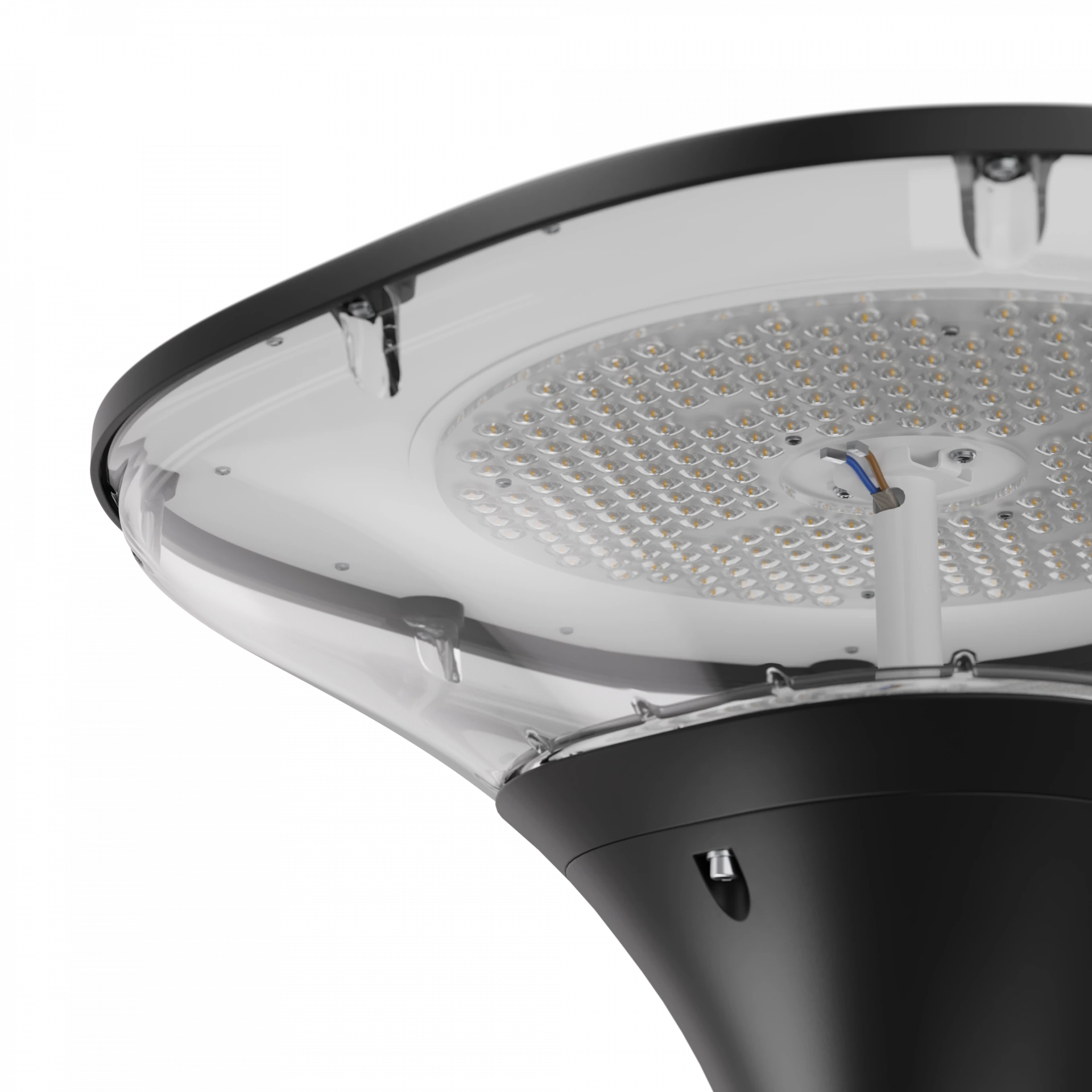
The luminaire utilizes high-efficiency LED technology – luminous flux range 2 400–12 800 lm with efficacy up to 160 lm/W and programmable power 15–80 W (power adjustment in 1 W increments via NFC protocol). The luminaire is equipped with a driver featuring CLO (Constant Lumen Output) function, ensuring luminous flux stabilization over time, with system lifetime up to 100,000 h (L95B10) in accordance with LM-80 data and TM-21 projection.
The Slim Line housing is manufactured from ADC12 die-cast aluminum and protected with a PVDF coating resistant to UV radiation, salt spray and urban pollution. The construction is dual-compartment (optical chamber + driver compartment) and may offer tool-free (clip-based) or tool-access service entry depending on maintenance policy. The luminaire meets IP66/IP67 ingress protection and IK09/IK10 impact resistance ratings, operates in ambient temperatures from –40 to +50°C and ensures 0% uplight (Dark Sky compliant).
AURA supports advanced control interfaces as standard: 1–10 V, DALI, DALI-2, D4i and NFC. Autonomous dimming profiles are available (5 programs, 1-minute resolution), along with Smart City readiness via Zhaga Book 18 and/or NEMA ANSI C136.41 sockets. Integration options include LoRaWAN / GSM / LTE / NB-IoT connectivity and compatibility with CMS platforms (TALQ / Plug&Play).
The optical system is based on a multi-lens configuration, and the distribution family includes solutions dedicated to single carriageway roads, urban streets, squares and parking areas, as well as applications requiring strict light pollution control (cut-off optics).
Applications
Urban parks and landscaped areas, promenades, public squares and recreational zones; pedestrian and bicycle paths, residential areas; urban and suburban streets (single- and double-sided layouts as well as central mounting); parking facilities, bus bays, maneuvering yards and open areas; tunnels, underpasses and infrastructure facilities; industrial sites and roadways with development on one side (optics limiting light spill beyond the illuminated area).